
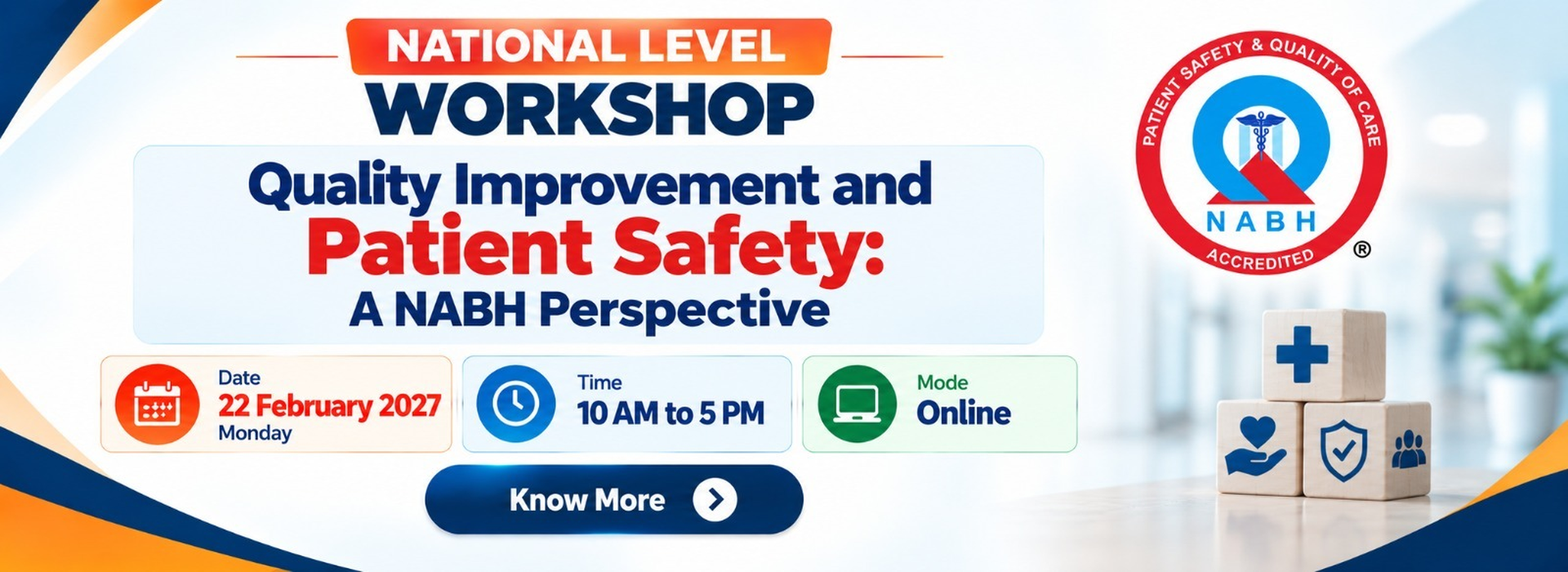
Workshop overview
The International Institute of Quality Accreditation & Rankings (IIQA) presents a practical and experience-driven workshop on “Quality Improvement and Patient Safety: A NABH Perspective”, designed to help hospitals and healthcare organisations understand, implement and strengthen structured quality improvement and patient safety systems. The workshop focuses on the practical application of NABH quality and patient safety principles, including quality improvement programmes, patient safety systems, quality indicators, incident reporting, risk identification, root cause analysis, corrective and preventive actions, clinical audits, monitoring mechanisms, documentation and continuous improvement. Participants will gain practical insights into developing a systematic approach where quality and patient safety become an integral part of everyday hospital operations. UNDERSTAND → IDENTIFY → IMPLEMENT → MONITOR → IMPROVE
What will the workshop cover?
01NABH Perspective on Quality Improvement & Patient Safety
- Understanding quality in healthcare
- Patient safety as a core quality objective
- NABH approach to quality improvement
- Structured quality and safety programmes
- Roles and responsibilities of hospital teams
- Developing a quality and patient safety culture
02Patient Safety Programme
- Patient safety principles
- Identification of patient safety risks
- Safety practices across clinical and support areas
- Prevention of avoidable harm
- Patient safety monitoring
- Staff involvement in safety initiatives
- Strengthening safety culture
03Quality Improvement Programme
- Understanding quality improvement
- Identification of quality gaps
- Quality improvement planning
- Selection of improvement priorities
- Implementation of improvement interventions
- Monitoring improvement outcomes
- Sustaining improvements
04Quality Indicators & Performance Monitoring
- Understanding quality indicators
- Selection of relevant indicators
- Indicator definitions
- Data collection
- Data validation
- Monthly/periodic monitoring
- Trend analysis
- Benchmarking and performance review
- Action based on indicator results
05Incident, Near-Miss & Adverse Event Management
- Incident identification
- Incident reporting systems
- Near-miss reporting
- Adverse event reporting
- Classification and analysis
- Escalation and review
- Learning from incidents
- Preventive measures
06Root Cause Analysis & Corrective Action
- When RCA is required
- RCA methodology
- Identifying contributing factors
- Process analysis
- Determining root causes
- Corrective action planning
- Preventive action
- Responsibility allocation
- Monitoring effectiveness
07Risk Management & Proactive Safety Improvement
- Risk identification
- Risk assessment
- Risk prioritisation
- Proactive risk management
- Failure Mode and Effects Analysis concepts
- Preventive controls
- High-risk process monitoring
- Reassessment of identified risks
08Clinical Audit & Continuous Improvement
- Purpose of clinical audit
- Audit planning
- Selection of audit topics
- Standards and criteria
- Data collection
- Gap identification
- Action planning
- Re-audit
- Demonstrating improvement
09Documentation, Evidence & Quality Records
- Quality documentation systems
- Patient safety records
- Incident records
- Quality indicator records
- RCA documentation
- CAPA documentation
- Audit records
- Committee review records
- Evidence traceability
- Data consistency
10Monitoring Effectiveness & Sustaining Improvement
- Measuring effectiveness of actions
- Post-intervention monitoring
- Comparing performance over time
- Identifying recurring problems
- Reassessment of improvement actions
- Standardisation of successful practices
- Sustaining quality gains
- Closing the improvement cycle
11Quality Committees & Multidisciplinary Participation
- Role of quality committees
- Patient safety committee functions
- Multidisciplinary participation
- Review of quality indicators
- Incident and RCA review
- Monitoring improvement projects
- Management review
- Accountability and follow-up
12Hospital Quality Improvement Action Plan
- Identification of priority areas
- Gap analysis
- Root-cause identification
- Action planning
- Responsibility allocation
- Timeline development
- Monitoring mechanism
- Effectiveness evaluation
- Continuous improvement roadmap
What will you gain?
- Participants will gain practical understanding of:
- NABH perspective on quality improvement and patient safety
- Structured patient safety programmes
- Quality improvement processes
- Quality indicators and monitoring
- Incident and near-miss reporting
- Adverse event analysis
- Risk identification and assessment
- Root Cause Analysis
- Corrective and Preventive Action
- Clinical audit
- Quality improvement projects
- Documentation and evidence management
- Quality committee functioning
- Monitoring effectiveness of corrective actions
- Sustaining improvement
- Developing hospital-level quality action plans FROM QUALITY REQUIREMENTS → PATIENT SAFETY → DATA → ANALYSIS → ACTION → CONTINUOUS IMPROVEMENT
Who can participate?
Hospital Leadership
Chairpersons
CEOs
Medical Superintendents
Hospital Administrators
Directors
Senior ManagementQuality & Accreditation Teams
Quality Managers
NABH Coordinators
Accreditation Teams
Quality Assurance Teams
Patient Safety Teams
Risk Management Teams Clinical Teams
Doctors
Nursing Professionals
Department Heads
Clinical Coordinators
Infection Control Professionals
Pharmacy Professionals
Laboratory Professionals Support & Functional Teams
HR
Administration
Biomedical Engineering
Facility Management
Medical Records
Housekeeping
CSSD
Dietary Services
Security
IT DESIGNED FOR Hospitals • Medical Colleges • Multispecialty Hospitals • Specialty Hospitals • Healthcare Organisations • NABH Applicant Hospitals • NABH Accredited Hospitals